
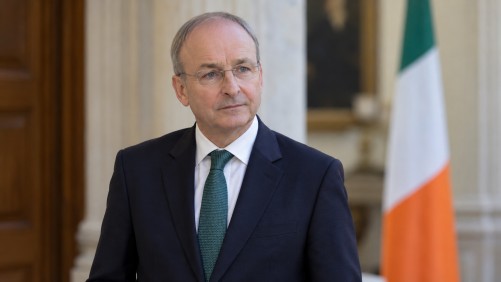
The upcoming UEFA Nations League matches between Ireland and Israel face heightened scrutiny and controversy, sparking debates that extend beyond the football pitch. Irish Prime Minister Micheál Martin has strongly defended Republic of Ireland manager Heimir Hallgrímsson after the coach described the games as akin to “playing against genocide.” These remarks have prompted a heated response from the Israel Football Association, which dismissed Hallgrímsson’s comments as “stupidity, ignorance and hypocrisy.”
Prime Minister Martin, speaking from New York during the UN General Assembly, criticized the remarks made by the Israeli federation and called for them to be retracted. His defense of Hallgrímsson is rooted in broader concerns about the humanitarian conditions in Gaza, suggesting that the criticism from the Israeli side is unwarranted.
The controversy highlights the complex intersection of sports and politics, with the matches initially scheduled to take place in neutral locations adding further layers of complexity. Ireland and Israel are set to meet in Debrecen, Hungary, on September 27, and in Bačka Topola, Serbia, on October 4. The latter match will be conducted behind closed doors, adding to the unusual circumstances surrounding these fixtures.
Despite the calls for a boycott from various Irish sports figures, the Football Association of Ireland has confirmed that both matches will proceed as planned. The association cites the potential repercussions of withdrawing from the fixtures, which could have broader implications for Irish football in international competitions.
This situation underscores the challenges sports organizations face when geopolitical tensions seep into the realm of international competitions. As the matches approach, the focus remains not only on the athletic contest but also on the broader political and humanitarian discourse it has ignited.