
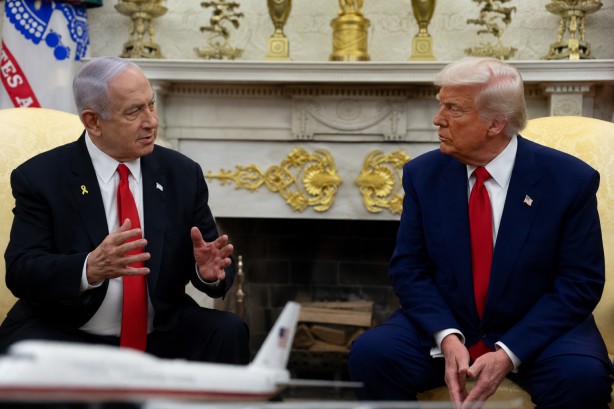
In a significant meeting at the White House, Israeli Prime Minister Benjamin Netanyahu and U.S. President Donald Trump delved into discussions on pivotal issues concerning Iran, regional security, and future collaborations between the United States and Israel. A senior Israeli official highlighted that the talks centered around three strategic approaches to dealing with Iran: pursuing diplomatic negotiations, escalating economic sanctions, or considering military action. The dialogue was framed as an open exchange of ideas, without pushing for one particular strategy.
Netanyahu reportedly conveyed skepticism regarding Iran’s commitment to any prospective agreement, though he refrained from advocating for new U.S. military interventions. Both leaders affirmed their mutual goal to prevent Iran from developing nuclear weapons. They also explored strategies to amplify economic pressure on Tehran, aiming to limit its potential impact on global energy markets. Netanyahu emphasized the importance of ensuring that Iran cannot leverage the Strait of Hormuz as a bargaining chip in negotiations.
The discussions also encompassed regional security matters, with particular attention to Israel’s military stance in Syria and southern Lebanon. Netanyahu presented maps to articulate Israel’s security concerns, underscoring the necessity of maintaining strategic defensive positions to counter potential threats.
Furthermore, the leaders examined the prospects for long-term defense cooperation between the U.S. and Israel. Netanyahu suggested a gradual reduction in Israel’s reliance on American military aid over the coming decade, coupled with an expansion of joint defense research and development initiatives.
Despite reports suggesting tensions, the Israeli official described the relationship between Netanyahu and Trump as close and cooperative, noting that their discussions on regional policies remain constructive and aligned.