
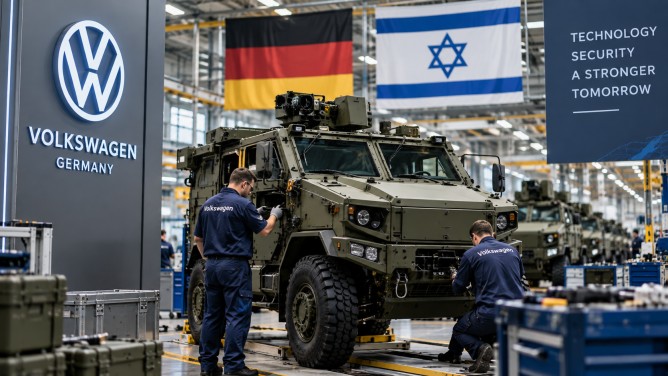
In a strategic shift, Volkswagen intends to convert its Osnabrück facility in Germany for defense production following the cessation of vehicle manufacturing in 2027. This transformation will commence with a collaboration involving Israeli defense firm Rafael. Under the agreement, the plant will be sold to Aurelius Capital, a Tel Aviv-based investment firm, in partnership with Lower Saxony, a substantial shareholder in Volkswagen. The facility is poised to produce components and systems for air defense mechanisms aimed at serving Germany and other European nations.
The transition is set to secure at least 1,200 jobs at the Osnabrück site. Volkswagen highlighted that this agreement not only preserves employment but also paves the way for potential additional defense-related projects. This move is seen as an opportunity to foster a new industrial direction for the plant. The decision to halt vehicle production at Osnabrück was made in 2024, driven by sagging demand, hefty production expenses, and mounting competition from Chinese car manufacturers. Concurrently, Volkswagen is undergoing its most extensive restructuring to date, which includes plans to cut around 100,000 jobs throughout the company in the coming years.
Aurelius Capital has emphasized the benefits of the Osnabrück facility, noting the skilled workforce, sophisticated manufacturing capabilities, and established production infrastructure available, which would be challenging to replicate anew. Aurelius has diversified interests spanning sectors such as cybersecurity, drone technology, and satellite systems, making it well-positioned to leverage the plant’s capabilities.
This redevelopment could serve as a blueprint for other Volkswagen plants facing uncertain futures. Across Europe, defense manufacturing is increasingly being explored as a viable alternative for underutilized automotive facilities. Other industrial companies are assessing similar transitions as they seek to adapt to evolving market conditions.