
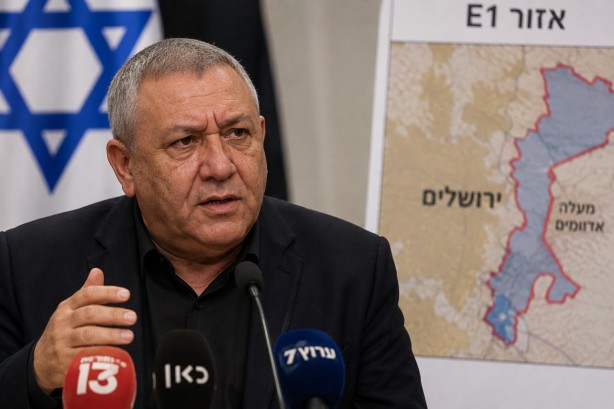
In the wake of the violent events on October 7, 2023, when Hamas launched an attack, Gadi Eisenkot, the leader of the Yashar party and a prominent figure in Israel’s political landscape, has dismissed the viability of a two-state solution. Eisenkot, a key player in the ongoing election race, expressed that continuing to endorse a two-state approach seems impractical given the recent hostilities. Meanwhile, he voiced his disapproval of the government’s contentious E1 settlement plan in the West Bank, suggesting that it could undermine Israel’s international reputation.
The E1 settlement project, which aims to extend Israeli settlements between Jerusalem and Ma’ale Adumim, has been met with substantial international resistance. Eisenkot criticized the initiative, stating that it may hinder the territorial continuity between significant Palestinian population hubs. This comes amidst the government’s recent move to open tenders for over 1,000 housing units in the E1 area, which has provoked the European Union to reportedly consider enacting measures against Israel should construction proceed.
Eisenkot further targeted Finance Minister Bezalel Smotrich and National Security Minister Itamar Ben Gvir in his criticisms, particularly regarding the surge in settler violence within the West Bank. He contended that their policies have compromised the Israel Defense Forces’ authority in the region, thereby damaging Israel’s global legitimacy and national interests.
Responding to Eisenkot’s remarks, Smotrich defended the E1 construction plan, asserting that it serves as a strategic measure to prevent the establishment of a Palestinian state in proximity to Jerusalem. The debate over the E1 project highlights the ongoing tensions and differing perspectives within Israeli politics concerning the future of Israeli-Palestinian relations and the impact on international perception.