
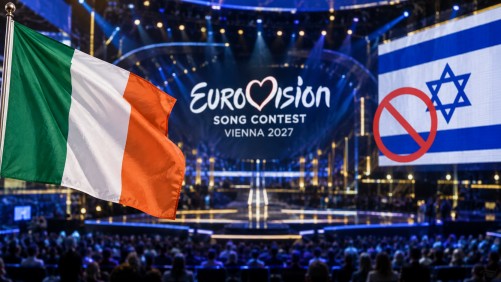
Ireland’s decision to abstain from the 2027 Eurovision Song Contest reflects a significant stance against the ongoing humanitarian crisis in Gaza. By choosing not to participate or broadcast the event, Ireland’s public broadcaster RTÉ underscores its concern over the conflict’s impact on civilian lives and the restrictions faced by international journalists in the region.
The European Broadcasting Union (EBU), which oversees the Eurovision Song Contest, has acknowledged Ireland’s decision, expressing respect and hope for future participation. This marks the second consecutive year that Ireland has opted out of the competition, following a similar boycott in 2026 alongside the Netherlands, Spain, Iceland, and Slovenia, due to Israel’s inclusion by the EBU.
The absence of Ireland in the contest, scheduled to be held in Burgas, Bulgaria, in May 2027, raises questions about the broader participation of other nations. The Netherlands has already signaled its intention to skip the event, though it is exploring alternative broadcasting options to maintain representation. Meanwhile, Spain, Iceland, and Slovenia have not yet declared their positions regarding the upcoming contest.
RTÉ’s firm stance highlights the intersection of entertainment and politics, as the broadcaster prioritizes humanitarian considerations over cultural participation. The ongoing situation in Gaza remains a pivotal factor in their decision-making process, emphasizing the broader implications of international conflicts on global cultural events.
As the Eurovision Song Contest approaches, the decisions of participating countries will continue to draw attention to the evolving political landscape and its influence on international events. The EBU remains in dialogue with RTÉ, hoping for reconciliation and future participation once the humanitarian conditions improve.