
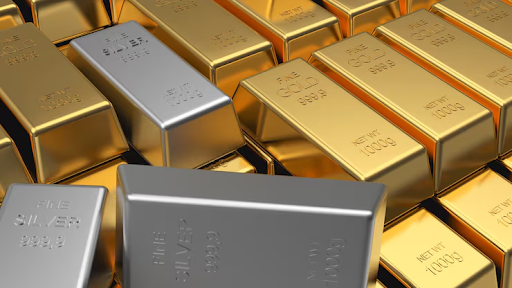
Precious metals markets experienced dramatic volatility on Monday, with gold and silver prices recovering after a severe downturn that shook global investors. Gold had plummeted as much as 8% to $4,465 per ounce before clawing back losses to settle at $4,700, still down 3.5% for the day. This followed a remarkable run that had pushed the yellow metal to nearly $5,600 last week.
Silver markets mirrored the turbulent pattern, dropping 7% after Friday’s devastating 30% collapse before stabilizing at $79.60 per ounce. The metals’ partial recovery provided crucial support for Britain’s premier stock index, which shattered the 10,300 barrier for the first time in history. The index concluded Monday’s session at 10,341 points after reaching an intraday peak of 10,345.
The precious metals had been climbing to successive peaks recently as investors flocked to safe haven investments amid escalating global tensions and concerns about Federal Reserve autonomy. The sharp reversal began Friday when the President announced Kevin Warsh, a former central bank governor with strong credentials, as his choice to lead the Federal Reserve. If the Senate confirms him, Warsh will replace the current chair when his tenure concludes in May.
Market analysts attributed the metals selloff to investor relief that a politically aligned candidate wouldn’t control the central bank. Susannah Streeter from Wealth Club noted that Warsh’s substantial Fed experience means he’s unlikely to bow to political pressure, triggering the major reversal in safe-haven positions. Michael Brown at Pepperstone characterized Friday’s downturn as a complete “meltdown in the metals space.”
Despite the recent turbulence, gold prices remain approximately 65% higher than a year ago, while silver has surged more than 120%. Deutsche Bank analysts maintain their forecast for gold reaching $6,000 this year. Market observers suggest the selloff represents an unwinding of overcrowded positions, with many speculative traders having been shaken out of the market.