
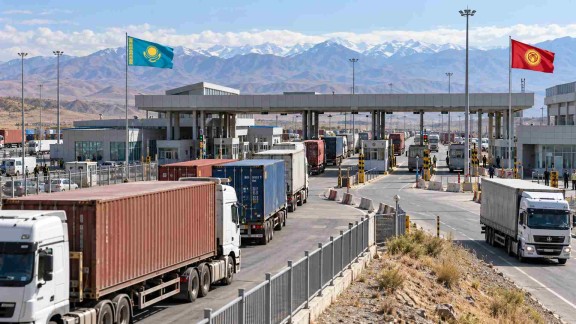
During the 14th meeting of the Kazakhstan-Kyrgyzstan Intergovernmental Council in Bishkek on October 30, Kazakhstan and Kyrgyzstan reiterated their commitment to increasing bilateral trade to $3 billion. This ambitious goal comes amidst ongoing discussions led by Kazakh Prime Minister Olzhas Bektenov and Kyrgyz Cabinet Chairman Adylbek Kasymaliyev, focusing on enhancing economic ties across various sectors including agriculture, transport, and digital cooperation.
Prime Minister Bektenov emphasized the importance of Kyrgyzstan as a regional partner and expressed optimism that strengthening cooperation in transport and agriculture would contribute significantly to achieving the trade target. His counterpart, Kasymaliyev, highlighted the historical and cultural ties between the two nations, noting the positive trajectory of their bilateral relations.
The economic relationship between Kazakhstan and Kyrgyzstan has shown promising growth, with Kazakhstan’s Minister of Trade and Integration, Arman Shakkaliyev, reporting a nearly 20% increase in trade from January to August 2026, reaching $1.75 billion. The agricultural sector, in particular, has seen substantial growth, with trade rising 41.5% in 2025 to over $500 million. Kazakhstan plans to further increase its agricultural exports to Kyrgyzstan, including grain and oilseeds.
The two countries are also exploring the development of a cross-border industrial, trade, and logistics complex to facilitate smoother trade flows and strengthen economic links between their border regions. Transport cooperation remains a high priority, as evidenced by increased rail and road freight volumes and the agreement to expand electronic transport permits at the shared border to 5,000. Additionally, the modernization of eight road border checkpoints is underway.
Scheduled flights between Kazakhstan and Kyrgyzstan have increased by 19%, now totaling 19 per week, bolstering business and tourism connections. Environmental and water management were also key topics of discussion, with both countries agreeing to enhance cooperation in these areas, including the exchange of hydrometeorological data.
Digital cooperation initiatives, such as those involving artificial intelligence and satellite data, were also on the agenda, reflecting the countries’ commitment to modernizing and integrating their economies further. The meeting concluded with the signing of a final protocol, with both sides pledging to implement the agreements and deepen cooperation across key sectors.