
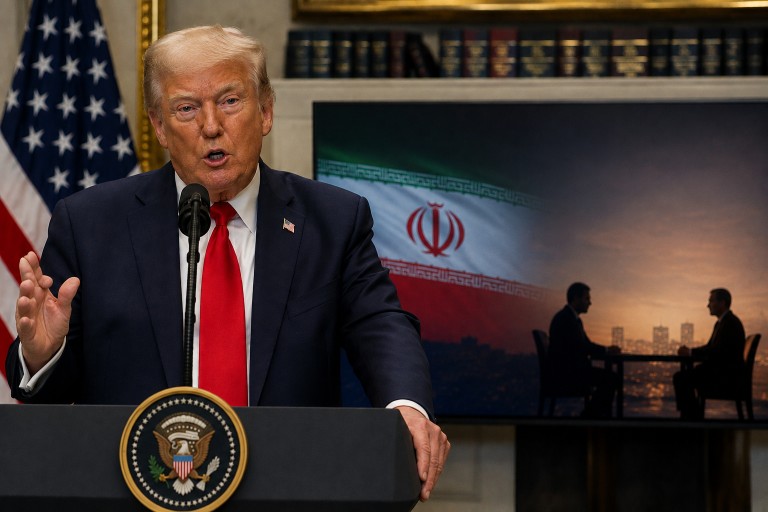
Recent developments indicate that a planned U.S. military strike on Iran was halted, according to statements made by President Donald Trump. He revealed that the decision to call off the attack came after receiving assurances that negotiations were nearing a framework agreement. This agreement aims to reopen the crucial Strait of Hormuz and address the ongoing concerns regarding Iran’s nuclear program. The move to hold back the military action was reportedly supported by requests from Iran and other Middle Eastern nations, with Israel also backing the decision.
In response, Iran has firmly dismissed President Trump’s claim that it had sought the cancellation of the military strike. Iranian officials described the assertion as false, emphasizing that their armed forces continue to be on high alert. They issued a warning that any military aggression from the U.S. or Israel would be met with a strong retaliatory response. This response could potentially include targeting regional energy infrastructure, highlighting the volatility of the situation.
The tensions between the U.S. and Iran have kept global energy markets on edge, particularly concerning the stability of oil supplies and regional security. The Strait of Hormuz, a vital shipping route for global energy supplies, has witnessed disruptions amid these heightened tensions. The ongoing uncertainty has underscored the fragility of energy markets and the potential for broader geopolitical consequences.
As diplomatic efforts continue, the international community remains attentive to the possibility of a breakthrough in negotiations that could pave the way for sustained peace and stability in the region. However, the risk of escalation persists, with the potential for military confrontations looming over the already tense relations.