
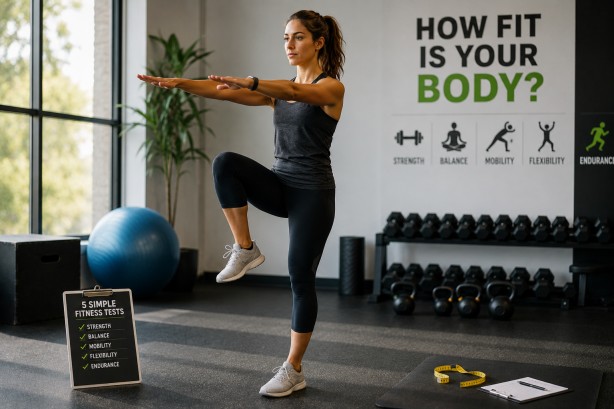
Functional fitness extends beyond traditional exercises like heavy weightlifting or long-distance running. It encompasses the ability to perform everyday movements such as squatting, rising from the floor, and maintaining balance, offering valuable insights into physical capabilities. A set of five simple exercises can help evaluate different facets of physical fitness, including strength, flexibility, mobility, grip, and balance. These exercises typically require minimal or no equipment and can be conducted safely at home.
One crucial exercise is the deep squat hold. Begin by standing with feet about hip-width apart, then lower into a deep squat while keeping heels flat on the ground. Aim to hold this position for up to 60 seconds without support. This movement assesses ankle, knee, and hip mobility while testing lower-body strength and control. Inability to maintain the position or keeping the heels grounded might suggest areas for improved mobility or control. Another exercise, the dead hang, involves gripping a secure pull-up bar and hanging with arms extended. A 30-second hold assesses grip strength and upper-body endurance and requires shoulder stability and control. Beginners should ensure the bar is secure and avoid this exercise if it could exacerbate existing injuries.
Getting up from the floor is another straightforward test. When sitting on the floor, try standing up without using hands, knees, or forearms. This movement combines lower-body strength, balance, coordination, and mobility. While it might highlight areas needing improvement, it’s important to note that performance can vary based on age, flexibility, past injuries, and fitness levels, and should not be seen as a definitive health measure. The forward fold exercise involves standing with feet hip-width apart, bending forward with straight legs, and seeing how far the hands can comfortably reach. This primarily tests hamstring flexibility and other muscles along the back of the body. Limited flexibility isn’t necessarily a health concern, as it varies individually and can improve with targeted stretching and mobility exercises.
Single-leg balance is another useful test. Stand on one leg and maintain balance, increasing the challenge by closing your eyes briefly when comfortable. This exercise engages muscles, joints, and the nervous system to maintain stability, offering insights into balance, proprioception, and ankle stability. Due to increased difficulty when eyes are closed, perform this in a clear, safe area where you can quickly stabilize if needed.
Collectively, these exercises offer a simple overview of various components of functional fitness, including strength, mobility, flexibility, grip, coordination, and balance. They are not intended as medical or diagnostic tests and lack a universal scoring system. Factors like age, training history, injuries, and individual body structure can influence performance. The aim isn’t immediate success across all tests but identifying areas for improvement and addressing them through consistent, safe exercise.